
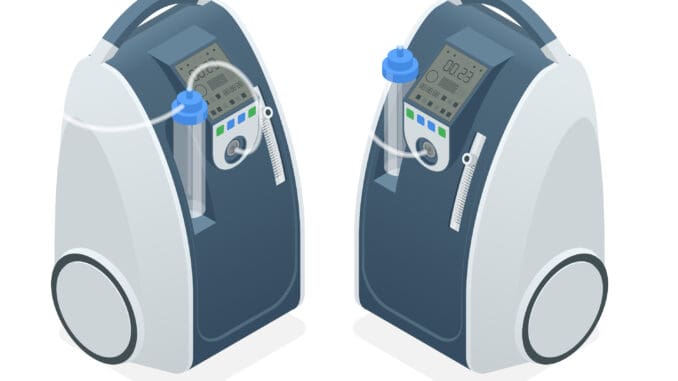
A Guide for Seniors and Caregivers
If you or someone you love has been prescribed supplemental oxygen, one of the first decisions you’ll face is choosing the right oxygen concentrator. It’s a decision that affects daily comfort, mobility, safety, and quality of life — so it deserves careful thought.
This guide walks through what oxygen concentrators are, how home and portable units differ, what factors matter most when making your choice, and why a simple monitoring tool called a pulse oximeter belongs alongside any oxygen concentrator in the home.
What Is an Oxygen Concentrator?
An oxygen concentrator is a medical device that pulls air from the surrounding environment, filters out nitrogen, and delivers concentrated oxygen to the user through a nasal cannula or mask. Unlike oxygen tanks, concentrators don’t run out of oxygen — they produce it continuously as long as they have power.
Concentrators are prescribed for conditions including COPD, pulmonary fibrosis, congestive heart failure, sleep apnea with hypoxemia, and other conditions that reduce the body’s ability to maintain adequate blood oxygen levels.
Your doctor will specify the flow rate you need, measured in LPM — liters per minute — and that number is the single most important specification to understand before you look at any equipment. LPM tells you how much oxygen the device delivers with each passing minute. Too low a flow rate means the patient isn’t receiving enough oxygen to meet their body’s needs, which can lead to fatigue, confusion, shortness of breath, and over time, serious complications affecting the heart and brain. Too high a flow rate, while less immediately dangerous, can cause its own problems including dryness, discomfort, and in certain conditions, suppression of the natural drive to breathe. Getting the flow rate right — and choosing a concentrator that can reliably deliver it — is the foundation of everything else in this decision.
The Pulse Oximeter: Your Most Important Companion Device
Before diving into the concentrators themselves, it’s worth discussing a small, inexpensive device that every oxygen user and their caregiver should own: a pulse oximeter.
A pulse oximeter is a clip-on device, typically worn on a fingertip, that measures blood oxygen saturation — expressed as SpO2 — and heart rate in real time. It works by shining a light through the skin and measuring how much oxygen the blood is carrying. The reading takes only seconds, causes no discomfort, and requires no special training to use.
For anyone on supplemental oxygen, a pulse oximeter is not a luxury. It’s a practical necessity.
Why Monitoring Matters
A concentrator set too low isn’t delivering enough oxygen to keep blood saturation at a safe level. A concentrator set too high may push oxygen levels above the therapeutic range, which for patients with certain conditions — particularly COPD — can actually reduce the body’s drive to breathe and cause carbon dioxide to accumulate in the blood, a potentially dangerous situation.
Most physicians target a blood oxygen saturation of 88–92% for patients with COPD, and 95% or above for patients with other conditions, though your doctor will give you a specific target range for your situation. Without a pulse oximeter, neither the patient nor the caregiver has any reliable way to know whether those targets are being met.
A pulse oximeter allows you to check whether the current LPM setting is keeping oxygen levels where they should be — at rest, during activity, and during sleep. It can also alert caregivers early to equipment problems, a dislodged cannula, or a change in the patient’s condition that warrants a call to the doctor.
What to Look for in a Pulse Oximeter
Pulse oximeters are widely available at pharmacies and online, with reliable models typically ranging from $20 to $60. When choosing one, look for the following:
- A clear, easy-to-read display with large numbers
- Both SpO2 (oxygen saturation) and pulse rate readings
- A low battery indicator
- FDA clearance or approval, which indicates it has met basic accuracy standards
- Comfortable fit, particularly for seniors with poor circulation or cold hands, which can affect readings on some devices
Finger clip models are the most common and easiest to use. Wrist-worn models with continuous monitoring are also available and can be useful for overnight monitoring, though they tend to cost more.
Keep the device clean, replace batteries regularly, and make a habit of checking readings at consistent times — such as when first waking, after mild activity, and before bed. Log the readings if your doctor has asked you to track trends over time.
A note of caution: a pulse oximeter is a monitoring tool, not a diagnostic device. If readings are consistently outside your target range despite correct concentrator settings, or if the patient is experiencing symptoms regardless of what the oximeter shows, contact your physician rather than adjusting equipment on your own.
Home Oxygen Concentrators
Home concentrators, sometimes called stationary concentrators, are designed to stay in one place — typically a bedroom or living area — and plug into a standard electrical outlet.
What They Do Well
Home units are workhorses. They deliver continuous flow oxygen at higher flow rates than portable models, typically ranging from 1 to 10 LPM, which makes them suitable for patients with higher oxygen needs. They run quietly, operate reliably around the clock, and require minimal day-to-day maintenance beyond routine filter cleaning.
Because they draw power from the wall rather than a battery, there’s no concern about running out of charge mid-use. For seniors who spend most of their time at home, a stationary unit often provides the most consistent and cost-effective solution.
Home units are also generally less expensive to purchase or rent than portable models, and most Medicare and insurance plans cover them when a qualifying prescription is in place.
Limitations to Know
The obvious limitation is that they’re not designed to travel. Most home concentrators weigh between 15 and 55 pounds, and while many come with wheels, taking one to a doctor’s appointment or on a road trip isn’t practical. Seniors who are active, travel frequently, or spend significant time outside the home will likely need a portable unit as well — or instead.
Home concentrators also depend entirely on electricity. In the event of a power outage, the unit stops working. Caregivers and patients relying on home oxygen should have a backup plan — whether that’s backup oxygen tanks, a generator, or a portable unit with battery capability.
Questions to Ask About Home Units
- What is the maximum flow rate, and does it meet the prescribed LPM?
- How loud is the unit during operation, and will it disrupt sleep?
- What is the weight, and can it be moved between rooms easily?
- What filter maintenance is required, and how often?
- Is the unit covered under Medicare, Medicaid, or private insurance?
- What is the warranty, and does the supplier offer in-home service?
Portable Oxygen Concentrators
Portable oxygen concentrators (POCs) are compact, lightweight units designed for use on the go. They run on rechargeable batteries, car adapters, or AC power, and most are small enough to carry in a shoulder bag or roll on a small cart.
What They Do Well
The biggest advantage of a portable unit is freedom. Seniors who use one can attend appointments, run errands, visit family, travel by car or plane, and participate in activities outside the home without interruption to their oxygen therapy.
Most portable units are FAA-approved for use on commercial flights, which is a significant consideration for anyone who travels. They are also considerably quieter than older models and increasingly user-friendly, with simple controls suited to seniors who may not be comfortable with complex technology.
Portable concentrators have improved dramatically in recent years. Many now offer both pulse dose and continuous flow delivery modes, extended battery life, and user-replaceable batteries that allow for longer outings without access to an outlet.
Limitations to Know
Portable units generally cannot deliver the same maximum flow rates as home units. Most pulse-dose portables top out at a setting equivalent to around 2–3 LPM, while continuous-flow portables typically max out at 3 LPM. Patients with higher oxygen requirements may find that no portable unit fully meets their prescription during exertion — something to discuss carefully with a prescribing physician before assuming a portable unit alone will be sufficient.
This is also where a pulse oximeter proves especially valuable during outings. If a patient notices symptoms of low oxygen — lightheadedness, increased breathlessness, or unusual fatigue — a quick oximeter reading can help determine whether the portable unit is maintaining adequate saturation levels and whether it’s time to rest, return home, or seek medical attention.
Battery life is another practical consideration. Depending on the model and flow setting, batteries may last anywhere from two to eight hours. Running errands for an afternoon is manageable with a spare battery; an all-day outing or a long flight requires more planning.
Portable units also cost more than home units — sometimes significantly more — and not all insurance plans cover them at the same rate.
Pulse Dose vs. Continuous Flow — Understanding the Difference
This distinction matters more than many buyers realize.
Continuous flow oxygen is delivered at a steady, uninterrupted rate regardless of whether the patient is inhaling. It mirrors the output of a home concentrator and is generally considered the most reliable delivery method, particularly for patients who breathe through their mouth, sleep with their device, or have higher oxygen needs.
Pulse dose oxygen, also called demand dose, delivers a burst of oxygen only when the device detects an inhalation. This conserves battery life and allows for lighter, more compact units — but it depends on the device being able to detect each breath reliably. Patients with very slow or shallow breathing, or those who use oxygen during sleep, may not be well served by pulse dose delivery alone.
Using a pulse oximeter when first switching to a pulse dose device — or when activity level changes — is a smart way to verify that the delivery mode is maintaining adequate oxygen saturation under real-world conditions.
Before purchasing or renting a portable unit, ask your doctor or respiratory therapist whether pulse dose delivery is appropriate for your specific condition and oxygen requirements.
Key Factors to Evaluate for Either Type
Regardless of whether you’re looking at a home unit, a portable unit, or both, the following factors apply across the board.
Prescribed flow rate. This is non-negotiable. The unit must be capable of delivering what your doctor has prescribed. Never select a concentrator based on cost or convenience if it cannot meet your required LPM.
Noise level. Some concentrators — particularly older or less expensive home units — can be surprisingly loud. If the unit will be used in a bedroom or shared living space, ask for the decibel rating and read user reviews before committing.
Ease of use. Controls should be clear and intuitive. Displays should be readable without straining. Alarms should be loud enough to be heard but not so startling they cause anxiety. For seniors with arthritis or limited hand strength, look at button size and cannula connection points.
Weight and portability. Even a home unit benefits from being movable between rooms. Portable units should be weighed against what the user can realistically carry or manage independently.
Power options and backup. For home units, ask about performance during power fluctuations and what backup options are available. For portable units, verify battery life at your prescribed flow setting — not the maximum rated battery life, which is often measured at the lowest setting.
Maintenance requirements. All concentrators require periodic filter cleaning and occasional professional servicing. Ask about the maintenance schedule and whether the supplier or manufacturer provides support.
Supplier support. The quality of the company providing the unit matters as much as the unit itself. Look for suppliers who offer 24-hour support lines, prompt equipment replacement if a unit fails, and staff experienced in working with Medicare and insurance billing. In Arizona, your Area Agency on Aging or a respiratory therapist can often provide referrals to reputable suppliers.
Medicare and insurance coverage. Medicare Part B covers oxygen equipment and supplies when certain criteria are met, including a qualifying diagnosis and a blood oxygen test showing levels at or below 88%. Coverage typically includes the concentrator rental, tubing, and cannulas. Confirm coverage before renting or purchasing, and ask the supplier to verify your specific benefits.
A Note for Caregivers
If you’re helping a loved one navigate this decision, your role goes beyond picking a device. You’re also the person most likely to notice when the equipment isn’t working correctly, when the cannula has slipped, or when battery levels are getting low during an outing.
Make a pulse oximeter part of your regular caregiving routine. Check readings when your loved one wakes up, after any physical activity, and before bed. If readings are consistently outside the range your doctor has specified, don’t adjust the concentrator settings on your own — call the physician or respiratory therapist. Equipment changes made without medical guidance, even well-intentioned ones, can cause harm.
Familiarize yourself with how the concentrator operates — its alarms, its indicators, and its routine maintenance needs. Know where the nearest supplier is located and have a backup plan for power outages or equipment failure. And take note of how your loved one is tolerating their oxygen therapy. If they’re removing the cannula frequently, complaining of dryness, or showing signs of insufficient oxygen such as increased confusion, breathlessness, or bluish lips or fingertips, those are conversations to bring back to their physician promptly.
Brief Recap
Choosing an oxygen concentrator is a medical decision first and a practical decision second. Start with your doctor’s prescription and work outward from there — matching the unit’s capabilities to your actual needs, your living situation, your activity level, and your budget.
A pulse oximeter costing less than $50 gives patients and caregivers a real-time window into whether that equipment is doing its job. It’s one of the simplest, most affordable tools available to anyone managing oxygen therapy at home, and it belongs on the same checklist as the concentrator itself.
Don’t be pressured into purchasing rather than renting before you’ve had time to evaluate a unit in your own home. Many suppliers offer rental-to-purchase arrangements that give you time to assess whether a particular model is the right fit.
And if you’re unsure where to start, Arizona’s network of senior resources — including home health agencies, respiratory therapists, and Area Agencies on Aging — can help connect you with reputable suppliers and guidance specific to your county and insurance situation.
The information in this article is intended for educational purposes and does not constitute medical advice. Always consult your physician or a licensed respiratory therapist before selecting or changing oxygen therapy equipment.