
Counties and Communities Covered in This Guide
This guide covers senior centers and aging services across Arizona’s major counties. If you are not sure which county you live in, find your city or town below.
Maricopa County — Phoenix, Scottsdale, Mesa, Tempe, Chandler, Gilbert, Glendale, Peoria, Surprise, Goodyear, Avondale, Buckeye, Sun City, Sun City West, Fountain Hills, Cave Creek, Carefree, Queen Creek, El Mirage, Tolleson, Litchfield Park, and Paradise Valley.
Pima County — Tucson, Oro Valley, Marana, Sahuarita, Green Valley, Catalina, Vail, and South Tucson.
Pinal County — Casa Grande, Florence, Coolidge, Eloy, Maricopa (city), Apache Junction, San Tan Valley, Oracle, and Superior.
Gila County — Globe, Miami, Payson, Pine, and Strawberry.
Yavapai County — Prescott, Prescott Valley, Cottonwood, Sedona, Camp Verde, Chino Valley, Dewey-Humboldt, and Clarkdale.
Coconino County — Flagstaff, Sedona (partly), Williams, Page, and Tusayan.
Mohave County — Kingman, Lake Havasu City, Bullhead City, and Golden Valley.
La Paz County — Parker and Quartzsite.
Yuma County — Yuma, San Luis, Somerton, and Wellton.
Cochise County — Sierra Vista, Bisbee, Douglas, Benson, Willcox, Tombstone, and Huachuca City.
Graham County — Safford, Thatcher, and Pima (town).
Greenlee County — Clifton and Duncan.
Santa Cruz County — Nogales and Patagonia.
Apache and Navajo Counties — Show Low, Pinetop-Lakeside, Snowflake, Taylor, Holbrook, Winslow, St. Johns, Springerville, and Eagar.
Navajo Nation and Tribal Communities — Window Rock, Chinle, Kayenta, Tuba City, and communities served by the Inter Tribal Council of Arizona and individual tribal governments.
Not every community listed above has its own dedicated senior center, but every community is served by a regional Area Agency on Aging that coordinates meals, transportation, and services. If your city or town is listed here, this guide will point you to the right resources.
Senior centers are one of Arizona’s most underused resources. They are far more than a place to eat lunch — today’s centers offer fitness classes, social events, health screenings, Medicare counseling, legal assistance, caregiver support, computer labs, arts programs, day trips, and in many cases, subsidized transportation to get you there. For seniors living alone or on a fixed income, a nearby center can be the difference between isolation and a full, connected life.
Arizona has dozens of senior centers operated by cities, counties, nonprofit organizations, and tribal governments. This guide covers the most notable centers across the state’s major counties, what they typically offer, how to join, and where to find the one nearest to you.
What Most Arizona Senior Centers Offer
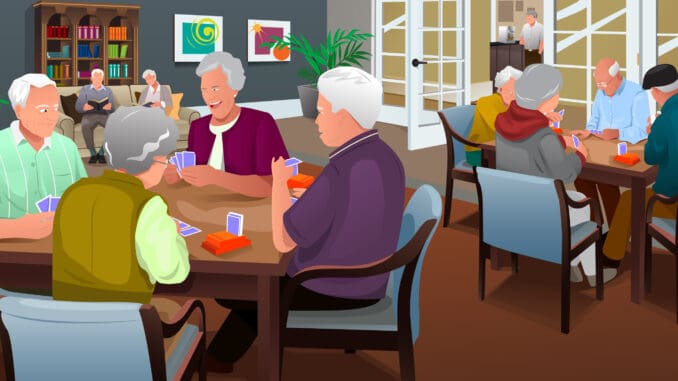
While programming varies by location, the majority of Arizona senior centers offer a common core of services that includes daily congregate meals (usually lunch, served weekdays, with reservations required), fitness and exercise classes such as yoga, tai chi, line dancing, and strength training, social activities including card games, bingo, dances, live music, and movie screenings, arts and crafts workshops, educational programs and guest speakers on topics like health, finances, and technology, health and wellness services such as blood pressure screenings, flu shots, and health education, case management and social services including help applying for benefits like AHCCCS, SNAP, and ALTCS, Medicare and SHIP (State Health Insurance Assistance Program) counseling, legal assistance for qualifying seniors, computer labs and technology classes, day trips and outings, and subsidized or free transportation to and from the center.
Many centers also serve as distribution points for commodity food boxes, free medical equipment loans, and emergency resources like cooling relief during Arizona’s brutal summers.
How to Join a Senior Center
Joining a senior center in Arizona is typically simple and inexpensive. Most city-operated centers require a membership that involves filling out a short registration form (either in person or online), showing proof of age (most centers serve adults aged 50, 55, or 60 and older depending on the center), and paying a modest annual fee, if any.
Phoenix charges $20 per year for city residents and $40 for non-residents. Scottsdale, Chandler, and Tucson centers are generally free or require only a nominal activity card fee. Many nonprofit-operated centers like the Aster centers in Mesa ask for an optional $24 annual donation but do not require it. Congregate meals are typically offered on a suggested donation basis of $2 to $3 for seniors aged 60 and older, with a fixed fee of $5 for younger participants.
No one is turned away for inability to pay. If cost is a concern, ask the center’s front desk — nearly all centers have policies to waive fees.
Maricopa County
Maricopa County is home to the largest concentration of senior centers in the state, reflecting its population of over four million residents.
City of Phoenix Senior Centers
Phoenix operates 15 senior centers through the Human Services Department, making it one of the largest municipal senior center networks in the country. Centers are open Monday through Friday from 8 a.m. to 5 p.m. and offer clubs, classes, social activities, entertainment, fitness programs, health and education programming, and a daily lunch served at 11:30 a.m. (reservations required 72 hours in advance). Membership at one center provides access to all 15 locations. The city also provides a Senior Center Shuttle Program with subsidized taxi service for eligible members aged 60 and older to travel from home to their nearest center within Phoenix city limits.
To register or learn more, call 602-262-7379 or visit: https://www.phoenix.gov/administration/departments/humanservices/programs-services/seniors-older-adults.html
Scottsdale Senior Services
Scottsdale operates two senior centers — the Granite Reef Senior Center (1700 N. Granite Reef Road, 480-312-1700) and the Via Linda Senior Center (10440 E. Via Linda, 480-312-5810). Both centers offer fitness centers with free weights and cardio equipment, support groups, a free medical equipment loan program, SHIP Medicare counseling, food distribution, and a wide range of social and recreational activities. Masters-level social workers are available by appointment for case management and home visit assessments at no charge. Scottsdale’s program is notable for its annual Arts and Crafts Fair, now in its fourth decade, and a popular annual talent show.
Visit: https://www.scottsdaleaz.gov/seniors
Mesa — Aster Senior Centers
Mesa is served by Aster Aging (formerly East Valley Adult Resources), a nonprofit that operates two senior centers: the Aster Senior Center at Mesa Downtown (247 N. Macdonald, 480-962-5612) and the Aster Senior Center at Red Mountain (7550 E. Adobe Street, 480-218-2221). Both are open Monday through Friday from 8 a.m. to 4 p.m. Aster centers are social hubs offering daily nutritionally-balanced lunches, live music and movie events, yoga and dance classes, education sessions, support groups, bingo, games, and a café at each location. Aster Aging is also the exclusive Meals on Wheels provider for the East Valley, delivering over 100,000 meals annually to homebound seniors.
Visit: https://www.asteraz.org/services/seniorcenters.html
Chandler Senior Center
The Chandler Senior Center (202 E. Boston Street, 480-782-2721) is a gathering place for adults aged 55 and older, offering recreational, social, and supportive services. Programming includes arts and crafts, exercise classes, social outings, a daily hot lunch, on-site resource providers, and caregiver support. Named one of the five best places to live by AARP Magazine in part because of its senior programming, Chandler’s center has become a core hub for information sharing and social services. Browse the monthly calendar of events or the Break Time Recreation Guide for current programming.
Visit: https://www.chandleraz.gov/explore/chandler-recreation/centers-and-facilities/chandler-senior-center
Tempe Senior Centers
Tempe operates multiple senior center locations including the Dennis J. Cahill Senior Center (715 W. 5th Street), the Escalante Senior Center (2150 E. Orange Street, offering Adult 50+ fitness classes), and the North Tempe Senior Center (1555 N. Bridalwreath Street, operated in partnership with the Tempe Community Action Agency). All offer a mix of in-person and virtual programs. Contact the Tempe Parks and Recreation Department for current schedules.
Gilbert Community Senior Center
The Gilbert Senior Center (130 N. Oak Street) is located inside the Gilbert Community Center and primarily serves seniors over 55 with programs, meal service, field trips, and social activities.
Area Agency on Aging, Region One
The central coordinating organization for all senior services across Maricopa County is the Area Agency on Aging, Region One. Their 24-hour Senior HELP LINE (602-264-4357, toll-free at 888-264-2258) provides information and referrals for any senior-related need in the county, from housing and healthcare to transportation and legal assistance. If you are unsure which center or service is right for you, this is the place to start.
Visit: https://www.aaaphx.org
Pima County
City of Tucson Senior Programs
Tucson Parks and Recreation operates senior programming at multiple recreation centers across the city, including the Carol West Senior Center at the Morris K. Udall Center. Seniors aged 50 and older can purchase a Senior Activity Card for access to programs and services at all Tucson recreation centers. Activities include fitness classes, arts and crafts, social events, and more. Each center’s offerings vary, so check individual location pages for details.
Visit: https://www.tucsonaz.gov/Departments/Parks-and-Recreation/Classes-and-Programs/Senior-Programs
Pima Council on Aging (PCOA)
PCOA is the Area Agency on Aging for Pima County (Region II) and is the central hub for senior services in the Tucson area. PCOA operates the Katie Dusenberry Healthy Aging Center (600 S. Country Club Road, Tucson) and provides a wide network of services including congregate and home-delivered meals, Medicare counseling, caregiver support, benefits assistance, legal referrals, and a comprehensive online resource directory of senior centers and services throughout Pima County. PCOA’s resource directory at pcoa.org is one of the best-organized county-level senior resource databases in the state.
Phone: 520-790-7262 Visit: https://pcoa.org
Pima County Older Adult Wellness
In addition to the city programs, Pima County’s Health Department runs an Older Adult Wellness Program that provides free blood pressure screenings, health education, and case management at six congregate meal sites across the county. These include Ellie Towne/Flowing Wells, Donna Liggins Center, El Rio Neighborhood Center, and Armory Park Senior Center.
Visit: https://www.pima.gov/2149/Older-Adult-Wellness
Pinal and Gila Counties
Central Arizona Aging (Formerly Pinal-Gila Council for Senior Citizens)
Central Arizona Aging, formerly known as PGCSC, is the Area Agency on Aging for Region V covering Pinal and Gila counties. Since 1974, this nonprofit has operated senior centers, Meals on Wheels, caregiver support programs, and legal services for seniors across a vast, largely rural service area that includes Casa Grande, Coolidge, Eloy, Florence, Globe, Miami, Payson, and other communities.
Senior centers operated or contracted through Central Arizona Aging offer congregate meals, recreation, educational programs, and social activities with suggested donation-based pricing. Call Central Intake at 520-836-2758 or 1-800-293-9393 for help finding the center nearest to you.
Visit: https://www.pgcsc.org or https://www.caaging.org
Yavapai County
Prescott and Prescott Valley
Yavapai County has a large and growing senior population. In Prescott Valley, the CASA Senior and Community Center (4861 N. Judy Court) is a well-regarded hub offering daily homemade meals, a salad bar, bingo, card games, craft classes, and a thrift shop. Hours are Monday through Friday, 8 a.m. to 4 p.m.
The City of Prescott also maintains senior programming through its parks and recreation department and partners with regional providers.
Area Agency on Aging, Region Three (NACOG)
Senior services across Yavapai, Coconino, Apache, and Navajo counties are coordinated through NACOG (Northern Arizona Council of Governments), the Area Agency on Aging for Region III. NACOG provides information and referrals, congregate and home-delivered meals, caregiver support, and benefits counseling for the entire northern Arizona region. Their Flagstaff office serves as the hub.
Phone: 877-521-3500 (toll-free) Visit: https://www.nacog.org
Coconino County
Flagstaff
The Joe C. Montoya Community and Senior Center in Flagstaff is the primary senior center for the area, offering weekday programming, meals, activities, and social services. Hours are Monday through Thursday, 7 a.m. to 8 p.m. and Friday 7 a.m. to 2 p.m. NACOG (Region III Area Agency on Aging) coordinates additional senior services across the county, including rural communities.
Sedona
The Sedona Community Center hosts senior programming including fitness classes, social events, and educational workshops. For current schedules, contact the center directly or call NACOG’s toll-free line at 877-521-3500.
Mohave, La Paz, and Yuma Counties
Area Agency on Aging, Region Four
Senior services in Arizona’s western counties are coordinated through the Western Arizona Council of Governments (WACOG), the Area Agency on Aging for Region IV. WACOG serves Mohave, La Paz, and Yuma counties with offices in both Yuma and Kingman.
Yuma Office: 1235 S. Redondo Center Drive, Yuma, AZ 85364 Phone: 800-782-1886
Kingman Office: 208 N. 4th Street, Kingman, AZ 86401 Phone: 928-753-6247
These offices can connect you with congregate meal sites, senior centers, in-home care, transportation assistance, and other aging services in the region.
Lake Havasu City and Kingman both have senior center programming through their parks and recreation departments and community centers. Call 211 Arizona (dial 2-1-1) to find the specific location and schedule nearest to you.
Cochise, Graham, Greenlee, and Santa Cruz Counties
SEAGO Area Agency on Aging (Region VI)
Southeastern Arizona is served by SEAGO (SouthEastern Arizona Governments Organization), the Area Agency on Aging for Region VI. SEAGO coordinates senior services across four counties, including congregate meal sites, transportation to meal sites and medical services, case management, Medicare counseling, caregiver support, legal services, and the long-term care ombudsman program.
For seniors in the Willcox, Benson, Sierra Vista, Bisbee, and Douglas areas, SEAGO provides transportation to congregate meals and medical appointments. Contact numbers by area include Benson: 520-586-9406, Bisbee/Douglas: 520-364-4474, and Willcox: 520-384-8575.
SEAGO Main Office: 300 Collins Road, Bisbee, AZ 85603 Phone: 520-432-2528 Email: aging@seago.org Visit: https://www.seago.org
Navajo Nation and Tribal Communities
Inter Tribal Council of Arizona — Area Agency on Aging, Region VII
Senior services for Arizona’s tribal communities are coordinated through the Inter Tribal Council of Arizona, which serves as the Area Agency on Aging for Region VII. Their office is located at 2214 N. Central Avenue, Suite 100, Phoenix, AZ 85004. Phone: 602-258-4822.
The Navajo Nation also operates senior centers and meal programs through the Navajo Nation Department for Self Reliance, with offices in Window Rock, Chinle, Kayenta, Shiprock, and Tuba City. The Pascua Yaqui Tribe near Tucson offers congregate meals, home-bound meals, weekly activities, and social work support for enrolled seniors.
Tribal senior programs may have specific enrollment requirements. Contact the tribal government directly or call 211 Arizona for referral information.
How to Find the Center Nearest to You
If you are not sure which senior center is in your area or which services are available, these statewide resources can help.
211 Arizona — Dial 2-1-1 from any phone (available daily in English and Spanish). Live operators will help you find senior centers, meal programs, transportation, and other services by your address or ZIP code. You can also search online at https://211arizona.org
Arizona Area Agencies on Aging (AZ4A) — The statewide network of seven regional Area Agencies on Aging provides a complete list of contact information by county at: https://arizonaaging.org/area-agencies
Arizona Department of Economic Security, Division of Aging and Adult Services — The state agency overseeing senior services statewide. Visit: https://des.az.gov/services/aging-and-adult/area-agencies-aging
Tips for Getting the Most Out of Your Senior Center
If you have never visited a senior center, it can feel unfamiliar at first. Here are a few suggestions for making the most of it.
Start with lunch. Showing up for the midday meal is the easiest way to walk in the door. You will sit with other people, someone will introduce themselves, and by the second or third visit the faces start to become familiar.
Try one class or activity. Most centers post a monthly calendar of events. Pick one thing that sounds interesting — a chair yoga class, a card game, a guest speaker — and commit to going once. You do not have to sign up for everything.
Ask about transportation. If getting to the center is a barrier, ask the front desk about shuttle services, subsidized taxi programs, or volunteer driver programs. Many Arizona senior centers have transportation built into their services specifically because they know that mobility is the number one barrier to participation.
Bring a friend or neighbor. If you know someone who might benefit from getting out of the house, invite them along. Senior centers thrive on word of mouth, and going with a familiar face makes the first visit much easier.
Ask about services beyond activities. Many people join a senior center for the social programming and only later discover that the center also offers free Medicare counseling, legal assistance, benefits enrollment help, or caregiver support groups. These services can be life-changing, and they are often available at no cost.
Arizona’s senior centers are funded through a combination of the Older Americans Act, state and local government budgets, grants, and donations. They exist specifically to keep older adults healthy, connected, and independent for as long as possible. They are among the best returns on public investment in the state — and they are dramatically underutilized.
If you or a loved one could benefit from a hot meal, a fitness class, a Medicare question answered, or simply an afternoon spent with other people instead of alone in front of a television, your local senior center is waiting. The door is open, the lunch is good, and the membership costs less than a single meal at a restaurant.
For a complete directory of senior services across Arizona — including home care, assisted living, hospice, transportation, and more — browse our listings at Senior Support Arizona. We catalog over 725 organizations serving every county in the state.
This article is current as of May 2026. Senior center hours, programs, and contact information may change. Always call ahead or check the center’s website to confirm current schedules. If you have trouble finding a center in your area, dial 211 from any phone for assistance.